Winner – Voltage Testers: Klein Tools Non‑Contact Voltage Tester with Flashlight NCVT‑3
The non‑contact voltage tester is one of the most basic and essential tools in an electrician's arsenal. It is the device that is reached for before any other, the first line of defense against the invisible hazard of live electricity. A good non‑contact tester should be sensitive enough to detect voltage from a safe distance, selective enough to avoid false positives from induced voltages or ghost signals, rugged enough to survive the drops and bumps of daily use, and simple enough to operate with one hand, in the dark, without looking at the controls. The Klein NCVT‑3, which won the 2015 Pro Tool Innovation Award for Voltage Testers, excelled in every one of these categories. It detected AC voltage from 12 to 1,000 volts—a range that covered everything from low‑voltage control wiring to the highest residential and commercial line voltages—and it provided both visual and audible indication of the presence of voltage. A bright LED bar graph on the tip of the tester illuminated with increasing intensity as the voltage increased, giving the user a semiquantitative sense of the voltage level. An audible tone beeped at a frequency that increased with the voltage and the proximity to the source, allowing the user to trace a live wire through a bundle or to find the exact point where a cable was energized. The integrated flashlight was a feature that demonstrated genuine understanding of how electricians work. When an electrician is probing for voltage inside a dark panel, a dim junction box, or a shadowed attic, they need a flashlight in addition to their voltage tester. The NCVT‑3 combined both functions in a single tool, eliminating the need to juggle two devices or to hold a flashlight in the teeth. The flashlight was independent of the voltage detection circuit, so it could be used simply as a light without activating the voltage sensor. The NCVT‑3 was built to Klein's tough standards. It carried an IP67 rating—completely dust‑tight and capable of surviving immersion in water up to one meter for 30 minutes. It could withstand a 6.6‑foot drop onto concrete or steel without damage. And it carried a CAT IV 1000V safety rating, the highest category for transient overvoltage protection, meaning it could be used safely on the service entrance of a building. The tester ran on two AAA batteries, providing up to 15 hours of continuous voltage detection or 6 hours of flashlight use. It was, in the assessment of our reviewers, as close to a perfect tool as any we had evaluated. For just under $25, the Klein NCVT‑3 was an impulse purchase that every electrician—and every professional who occasionally worked around electricity—should own. It combined the functions of a voltage tester and a flashlight, it was built to survive the harshest job site conditions, and it performed its primary function with a level of sensitivity and reliability that inspired confidence. It was a worthy winner of the Innovation Award, and it remains a benchmark in the category.
Winner – Laser Distance Measures: Short Range: Bosch GLM 50 C
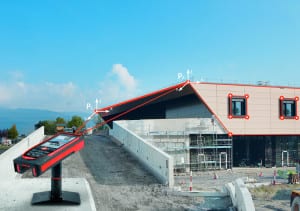
The Bosch GLM 50 C represented a significant step forward in the evolution of the laser distance measure. Where previous generations of laser measures had been essentially standalone devices—a laser, a sensor, and a monochrome LCD display—the GLM 50 C added Bluetooth connectivity, a backlit color display, and a suite of software features that transformed it from a simple measuring tool into a component of a larger digital workflow. The color screen was a genuine improvement over the monochrome displays that had been standard in the category. It was brighter, easier to read in varied lighting conditions, and capable of displaying full‑word function descriptions rather than cryptic abbreviations. The user did not need to consult the manual to remember that "IND" meant "indirect measurement" or that "VOL" meant "volume"—the screen spelled it out in plain language. The Bluetooth capability allowed the GLM 50 C to communicate with Bosch's free smartphone apps, which provided two key functions. The Measure & Document app allowed the user to capture measurements from the laser and organize them into projects, complete with photos, notes, and the ability to export the data as a PDF or a spreadsheet. The FloorPlan app used the laser measurements to create a scaled floor plan of a room, automatically calculating dimensions and generating a professional‑quality drawing. The laser itself was accurate to ±1/16 inch and had a range of 165 feet, making it suitable for the vast majority of indoor measuring tasks. It offered length, area, volume, and indirect measurement functions, and it could store up to 50 measurements for later recall. The GLM 50 C was an example of how a tool could be enhanced by connectivity without losing the simplicity and reliability that made it useful as a standalone device. It was a worthy winner of the Innovation Award, and it paved the way for the connected laser measures that followed.
Winner – Laser Distance Measures: Long Range: Leica Geosystems DISTO S910
The Leica DISTO S910 was not merely a laser distance measure. It was a portable, handheld 3D measurement system that could capture the dimensions of a space, the angle between points, and the three‑dimensional coordinates of any point within its range—all from a single location. This capability was made possible by the SmartBase, an integrated referencing system that allowed the S910 to measure not only the distance to a point but the angle relative to the device's internal reference. By taking measurements to multiple points, the S910 could compute the three‑dimensional coordinates of each point and, from those coordinates, calculate distances, areas, and volumes that would be impossible to measure directly with a simple linear laser. The S910 could measure up to 1,000 feet with an accuracy of ±1/16 inch, making it suitable for the largest construction projects. It featured a color touchscreen with a viewfinder that functioned as a targeting sight for long‑range measurements. It could capture measurements and, via Bluetooth or WiFi, transmit them directly into a CAD program running on a laptop or a tablet. The integration with CAD was the S910's most transformative feature. Instead of measuring a space, writing down the dimensions, and then manually entering them into a CAD drawing—a process that was slow, error‑prone, and required multiple people—the user could stand in the center of the space, take a series of measurements, and watch the drawing update in real time on their computer screen. The 3D measurement capability also enabled entirely new workflows. A contractor could measure the dimensions of a complex architectural feature—a curved wall, an irregularly shaped opening—and capture its geometry directly into a CAD model, without the approximations and compromises that traditional measuring methods required. The S910 was not an inexpensive tool, and it was not intended for the casual user. It was a professional instrument for professionals who needed the highest level of accuracy and the most advanced measurement capabilities. It carried Leica's reputation for precision optics and rigorous calibration, and it met the ISO 16331‑1 standard for laser distance measures. It was a worthy winner of the Innovation Award, and it represented the state of the art in handheld laser measurement.
Winner – Non‑Linear Measurement: NWi Smart Wheel
The NWi Smart Wheel was a trundle wheel—a measuring wheel on a stick, the kind of tool that has been used for centuries to measure distances along the ground—but it was a trundle wheel that had been reinvented for the smartphone era. The Smart Wheel connected via Bluetooth to NWi's proprietary app, which ran on iOS and Android devices. As the user walked the wheel along a path, the app recorded the distance in real time, plotting the path on a map using the phone's GPS. The user could mark specific points along the path—a tree that needed to be removed, a pipe that was buried, a change in the terrain—and attach photos and text notes to each point. The result was a comprehensive, geo‑referenced record of the measured path, complete with annotations, that could be shared with a client, a subcontractor, or a project manager. The Smart Wheel was accurate to ±1/4 inch over 100 feet, which was more than adequate for the estimating, landscaping, and site‑planning applications for which it was designed. It eliminated the need to manually sketch a site plan, to pace off distances, or to try to reconstruct, from memory and a handful of notes, the layout of a property that had been walked hours or days earlier. For the landscape contractor who needed to measure a winding path for a new sidewalk, the irrigation installer who needed to calculate the length of a trench, the fencing contractor who needed to estimate the perimeter of a field, or the general contractor who needed to document the existing conditions of a site before beginning a project, the Smart Wheel provided a level of convenience and accuracy that a traditional trundle wheel could not match. It was a tool that took a centuries‑old measuring concept and brought it, decisively, into the 21st century.
Winner – Line Laser Levels: Spectra LT58 Universal Interior Laser
The Spectra Precision LT58 was a green‑beam, 360‑degree line laser designed specifically for ceiling work and interior layout. The shift from red to green laser diodes was one of the most significant trends in the laser level market in 2015, driven by the physics of human vision. The human eye is approximately four times more sensitive to green light than to red light, which means a green laser beam is dramatically more visible, particularly in bright indoor environments or when projected over long distances. The LT58 leveraged this sensitivity advantage to produce a bright, clear horizontal line that was visible up to 100 feet, even in rooms with floor‑to‑ceiling windows. The 360‑degree horizontal beam meant that a single setup in the center of a room could project a level line around the entire perimeter, eliminating the need to reposition the laser for each wall. Two vertical red beams, offset by 90 degrees, provided the X‑ and Y‑axis references for squaring the layout. The LT58 included a universal ceiling mount that was compatible with all types of ceiling track, including shadow track that required alignment to the top of the track rather than the bottom edge. A powerful 7,200‑mAh rechargeable lithium‑ion battery provided up to 19 hours of continuous green‑beam operation on a single charge, and the laser could also be operated directly from AC power. The combination of green‑beam visibility, 360‑degree coverage, long battery life, and the purpose‑built ceiling mount made the LT58 a standout in its category. It was a tool that was designed from the ground up for a specific set of applications, and it executed those applications flawlessly.
Winner – Rotary Laser Levels: NWi Smart Rotary
The NWi Smart Rotary was the first rotary laser that could be fully controlled from a smartphone or tablet, at a range of up to 1,200 feet. This capability effectively turned a two‑person job—one person operating the laser, another person at the far end of the site with the receiver—into a one‑person job. The user could adjust the grade setting, the rotation speed, the rotation direction, and the scan angle, all from their phone, without walking back to the laser. The app also provided built‑in help functions, including frequently asked questions, an electronic instruction manual, and tutorial videos. The user could save frequently used parameters as favorites, allowing them to be recalled instantly on future jobs. The Smart Rotary could be linked to a hub that provided real‑time updates to a project manager, enabling a level of remote oversight and quality control that was previously impossible. The Smart Rotary was a genuine innovation in a category that had seen relatively little change in its core functionality for decades. It leveraged the ubiquitous smartphone to add a layer of convenience, efficiency, and connectivity that transformed how a rotary laser could be used on a large job site.
Winner – Inspection Cameras: Milwaukee M12 M‑Spector Flex System
The Milwaukee M12 M‑Spector Flex System was a complete reimagining of the digital inspection camera. It addressed the three most persistent frustrations that users of inspection cameras had complained about for years: the difficulty of positioning the camera head to see what you wanted to see, the poor image quality and lighting that made it difficult to identify details, and the awkwardness of viewing the display when the camera was in a tight or overhead space. The PivotView camera head, which could be rotated through 270 degrees with the turn of a dial, solved the positioning problem. Instead of pushing, pulling, twisting, and hoping that the camera head would end up at the right angle, the user could simply dial it into position. The image quality was dramatically improved over previous generations of inspection cameras, thanks to a higher‑resolution sensor and, crucially, to an LED lighting system that Milwaukee claimed provided 15 times the illumination of competing cameras. The display was a 3.5‑inch wireless LCD console that could be detached from the camera handle and viewed from up to 15 feet away, meaning the user did not have to crouch in an awkward position with their head pressed against a pipe or a stud to see what the camera was seeing. The system could capture still images, record video with audio, and store everything on an SD card or transfer it via USB. It ran on Milwaukee's M12 battery platform, providing long run time and the convenience of using batteries that many professionals already owned. The M‑Spector Flex was available with cables of 3 feet or 9 feet, allowing the user to choose the length that best suited their applications. It was a tool that demonstrated genuine empathy for the user—an understanding of the physical contortions, the eye strain, and the frustration that had characterized inspection camera use for years—and it solved those problems with thoughtful, innovative engineering.
Winner – Thermal Imaging: Milwaukee M12 7.8KP Thermal Imager 2258‑21
The Milwaukee M12 7.8KP Thermal Imager brought professional‑grade thermal imaging to the M12 cordless platform, and it did so with a pixel density that was the highest in its class. The 7,800‑plus pixels—arranged in a 120‑by‑65 array—provided a level of detail that allowed the user to see subtle temperature differences, to identify the exact location of a hot spot on a circuit board or a cold spot on a wall, and to capture images that were sharp enough to include in reports without embarrassment. The thermal imager operated independently of a smartphone, capturing full‑data thermal images that could be stored on the included 4‑GB SD card and later transferred to a computer for analysis and report generation using Milwaukee's Thermal Imager Report Software. The dual‑laser targeting system projected two dots onto the surface being imaged, indicating the boundaries of the measurement area, which helped the user to aim the imager accurately. The on‑screen temperature readings, the hot‑and‑cold spot locators, and the independently adapting pixels—which automatically optimized themselves to provide superior detail in scenes that contained both very hot and very cold objects—made the M12 Thermal Imager a powerful diagnostic tool. It was built to survive the job site, with a 6‑foot drop rating and a durable overmolded housing. It ran on the M12 battery platform, meaning users who already owned Milwaukee M12 tools could use their existing batteries and chargers. The M12 Thermal Imager was not the most sophisticated thermal camera on the market—FLIR and Fluke offered models with higher resolution, more advanced analysis features, and greater sensitivity—but it was the most accessible thermal camera for the professional who needed thermal imaging as an occasional diagnostic tool rather than a daily instrument. Its price point, its integration with a widely‑used battery platform, and its rugged construction made it a compelling choice for electricians, HVAC technicians, and building inspectors who wanted to add thermal imaging to their diagnostic toolkit without making a five‑figure investment.
Conclusion: Test and Measurement Enters the Digital Age
The 2015 Pro Tool Innovation Awards in the Test and Measurement category captured a moment of rapid transformation in the tools that professionals use to measure, diagnose, and document their work. The winners reflected several broad trends: the integration of Bluetooth and smartphone connectivity into tools that had previously been standalone devices; the migration of advanced imaging technologies—thermal, laser, digital video—into smaller, more affordable, and more rugged form factors; the increasing importance of documentation and reporting as part of the professional workflow; and the relentless drive to make tools simpler, more intuitive, and more durable. The Klein NCVT‑3 demonstrated that even the most basic tool could be improved with thoughtful features. The Bosch GLM 50 C, the Leica DISTO S910, and the NWi Smart Wheel and Smart Rotary showed how connectivity could transform measurement into a seamless digital workflow. The Spectra LT58 leveraged the physics of human vision to make a laser level more visible and more useful. The Milwaukee M‑Spector Flex and M12 Thermal Imager brought advanced imaging technologies to the job site in packages that were rugged, portable, and affordable. Together, these products represented the state of the art in professional test and measurement in 2015, and they pointed the way toward the even more capable and connected tools that would follow in the years to come.
Comments 0
Leave a Comment