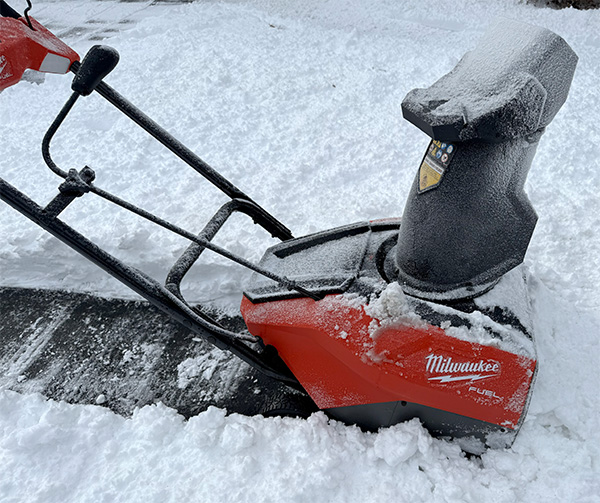
However, shifting from gas to the M18 ecosystem involves more than just swapping fuel for FORGE batteries. It requires a shift in strategy. After putting this unit through two primary real-world gauntlets-clearing six inches of powder and two inches of heavy, slushy "heart-attack" snow-the results reveal a machine that is undeniably potent, yet possesses the distinct quirks of a single-stage design.
"The M18 Fuel Snow Blower is a beast of a single-stage unit, offering 7.5 peak horsepower that refuses to stall. But while it has the muscle of a heavyweight, it retains the soul of a sprinter-built for speed and power on pavement rather than the plodding dominance of a two-stage tank."
Performance Testing: FORGE Batteries vs. The Elements
The 3036-22HD is a dual-battery machine that requires two M18 batteries to operate, though it features four active battery terminals to extend runtime. In our first test, utilizing a single pair of M18 FORGE 12Ah batteries, the blower tackled six inches of fresh snow with startling efficiency. It cleared an entire medium-sized driveway and a long stretch of sidewalk without a single stall-out.The second test was the true "torture test" : two inches of heavy, wet snow. By utilizing all four battery slots (totaling 48Ah of potential), the machine demonstrated its 7.5 HP peak power. Even when the auger was submerged in the heavy slush at the end of the driveway-the dreaded "plow pile"-the brushless motor maintained its RPMs. This reliability is a massive win for cordless tech; where older electric models would have tripped a breaker or bogged down, the M18 Fuel simply pushed through.
Design and Ergonomics: The Chute and the Spray
One of the most immediate observations during operation is the snow spray. Because this is a single-stage unit, the rubber auger makes direct contact with the pavement. While this results in a cleaner finish on smooth asphalt, it also generates a significant amount of "blowback" or fine spray.The gear-driven chute is a highlight-Milwaukee opted for a robust mechanical connection rather than finicky cables that can freeze or snap. Adjusting the 220-degree rotation and height is intuitive and can be done quickly via the handlebar controls. However, be prepared for frequent fine-tuning; if there is even a slight breeze, the machine's high-velocity discharge (throwing snow up to 35 feet) can quickly turn into a face-full of powder if the chute isn't perfectly angled.
Milwaukee M18 Fuel 3036-22HD Specifications
| Feature | Specification |
|---|---|
| Peak Power | 7.5 HP (Gas-Equivalent) |
| Clearing Width | 21 Inches |
| Throw Distance | Up to 35 Feet |
| Auger Type | Reinforced Rubber (Auger-Propelled) |
| Storage | Vertical Folding Design |
| Weight (with batteries) | Approximately 90 lbs |
The Maneuverability Paradox
While the auger-propelled drive does a fantastic job of pulling the machine forward-essentially "eating" its way through the snow-maneuvering the 90-pound unit is more challenging than its sleek design suggests. On shallow accumulations (under two inches), the rubber auger can sometimes feel like it is "fighting" the pavement, requiring more physical guidance than a larger, self-propelled two-stage blower.This model is clearly optimized for paved surfaces. If your driveway is gravel or extremely uneven, the auger-to-ground contact will likely pick up stones or catch on lips in the concrete. For those used to the effortless "gliding" of a two-stage machine with skid shoes, the M18 single-stage requires a more active, hands-on approach.
The Battery Compartment : A Note on Moisture
A minor but notable observation during the heavy wet-snow test was the presence of moisture inside the battery compartment. While the compartment is shielded, fine snow spray and melting slush managed to find their way in. While this didn't affect performance and is likely accounted for in Milwaukee's weather-sealed design, it is a reminder to wipe down the terminals and batteries before putting them back on the charger. Some users have noted that the addition of a DIY gasket or simply being mindful of the "ice build-up" in the compartment during multi-day storms is a wise precaution.Storage and Assembly : The Vertical Advantage
One area where Milwaukee absolutely beats traditional gas machines is in the garage. The 3036-22HD features a vertical storage design. The handles fold down, allowing the unit to be tipped onto its back. This reduces the footprint to roughly that of a large suitcase, making it a space-saving miracle for homeowners with crowded garages.The assembly process is slightly more involved than a standard mower-plan for about 20-30 minutes of "wrench time"-but the controls are flawlessly laid out. The LED headlights on the handlebars provide excellent visibility for early morning or late-night clearing without the "vibration blur" common in gas units.
The Verdict : Is the M18 Fuel Snow Blower Right for You?
The Milwaukee M18 Fuel 21" Snow Blower is a power-house that effectively eliminates the "gas anxiety" of winter. It starts instantly in sub-zero temperatures, runs 10 decibels quieter than gas, and clears with a level of aggression that makes it a legitimate professional tool.Pros :
* Unmatched Power : 7.5 HP ensures it won't bog down in the "plow pile."
* Battery Flexibility : Can run on 2 batteries or 4 for massive runtime.
* Vertical Storage : A massive space-saver compared to any gas model.
* Instant Start : No pull cords, no priming, no winterizing.
Cons :
* Single-Stage Limits : Not ideal for gravel; generates significant snow spray.
* Maneuverability : Can feel heavy and "catchy" on shallow snow or uneven pavement.
* Price : As a kit (3036-22HD), it represents a significant investment in the M18 platform.
Final Thoughts : If you are already on the M18 battery platform and have a paved driveway, this is a "no-brainer" upgrade. It offers the performance of a high-end gas machine with the convenience of a cordless drill. However, if you are clearing massive gravel lots or have physical limitations that require the machine to do 100% of the steering, you may still want to look toward a larger, self-propelled two-stage unit.
Comments 0
Leave a Comment