The Nesting Design: A Familiar Formula Executed Well
The Ideal 12‑In‑1 uses a nesting design that will be instantly familiar to anyone who has used a multi‑bit screwdriver from Klein, Milwaukee, Southwire, or any of the other major hand‑tool manufacturers. The core of the tool is a metal shank that is permanently mounted in the overmolded handle. This shank serves as the primary nut driver, capable of accepting 1/4‑inch and 5/16‑inch hex fasteners. Inside this shank nests a secondary shank, which provides 3/8‑inch and 3/16‑inch hex sizes. The secondary shank is removable; pull it out of the handle, and you can use it independently or insert it into the handle in either orientation to present the desired size. The shank assembly also houses a set of eight double‑ended bits that nest inside the handle body when not in use. These bits include the most commonly encountered fastener types: slotted (3/16″ and 1/4″), Phillips (#1 and #2), Torx (T10 and T15), and square drive (#1 and #2). The bits are standard 1/4‑inch hex shank, so they are compatible with any impact driver or bit holder that accepts that size. They are held in the shaft by a magnetic retainer that holds them securely during use but allows for easy removal when a different bit is needed.
The genius of this design is that it packs an enormous amount of functionality into a single tool without requiring the user to carry a separate bit case or deal with the frustration of fishing tiny bits out of a zippered pouch. Everything is self‑contained. The bits nest in the handle, the shanks nest inside one another, and the entire assembly is held together by friction and magnetic force. When you need the Phillips #2, you pull the shank out, extract the double‑ended bit from its storage slot, flip it to the Phillips side, and insert it into the magnetic retainer. The whole process takes approximately five seconds, and it can be performed with one hand if necessary. The bits stay in place during use; the magnet is strong enough to hold them securely even when you are applying significant torque to a stubborn screw. The nut driver sizes are similarly easy to access. Swap the outer shank for the desired hex size, or remove the inner shank and insert it into the handle for the 3/16″ or 3/8″ sizes. The handle provides a comfortable, secure grip regardless of which shank or bit is installed, and the overall feel is that of a dedicated, fixed‑shaft driver.
Bit Selection: What Ideal Includes—and What They Leave Out
The bit selection on the Ideal 12‑In‑1 is a deliberate attempt to cover the most commonly encountered fasteners in the electrical and HVAC trades while keeping the tool compact enough to be practical. The inclusion of both #1 and #2 Phillips is essential; these two sizes cover the vast majority of Phillips screws found on electrical panels, junction boxes, switches, receptacles, and HVAC equipment. The #1 is the smaller size, used on delicate components and smaller fixtures, while the #2 is the workhorse—the screw that holds panel covers, conduit clamps, terminal blocks, and countless other components in place. The two slotted sizes, 3/16″ and 1/4″, are similarly essential for the flat‑head screws that persist in older electrical installations and that are still used on some modern equipment, particularly in industrial settings. The Torx T10 and T15 bits address the growing prevalence of Torx fasteners in modern electronics, HVAC controls, and some electrical equipment. Torx screws, with their six‑pointed star profile, are less prone to cam‑out than Phillips or slotted screws, and they are increasingly specified by manufacturers who want to reduce assembly‑line errors. The square drive bits (#1 and #2) are a staple of electrical work, particularly in Canada where Robertson screws are the standard for many applications, and in the United States where they are common on electrical boxes and some commercial fixtures. The nut driver sizes—3/16″, 1/4″, 5/16″, and 3/8″—cover the most common hex fasteners that an electrician encounters: the 1/4″ and 5/16″ for panel screws and conduit clamps, the 3/8″ for larger hardware, and the 3/16″ for small, delicate applications.
What is missing? An 11/32″ nut driver, the size used for fluorescent light ballast nuts, is notably absent—a frustration that I have expressed in reviews of virtually every multi‑bit driver on the market. The 3/16″ hex size, while included, is one of the least commonly used sizes among working electricians. The inclusion of the 3/16″ over an 11/32″ is a choice that favors occasional, light‑duty use over a specific, frequently encountered maintenance task. It is a choice that every manufacturer seems to make, and it is a choice that frustrates electricians who change ballasts regularly. That said, for electricians who work primarily in new construction or who deal with LED fixtures that do not use the same ballast hardware, the absence of the 11/32″ is irrelevant. The bit selection also lacks some of the more esoteric fastener types that a few competitors include—hex bits, security Torx, spanner bits—but adding those would increase the size of the handle and the complexity of the tool. Ideal has chosen to focus on the most common fasteners, and for the vast majority of users, the included bits will cover everything they encounter.
Ergonomics: The Handle That Defies the Nesting‑Doll Law
Multi‑bit drivers that pack a dozen or more tools into a single handle tend to have one common ergonomic drawback: the handle is thick. It has to be, in order to accommodate the nested shafts, the stored bits, and the structural material that holds everything together. The result, in some designs, is a handle that feels like gripping a broomstick—functional, but not exactly comfortable, and definitely not conducive to the kind of delicate, fingertip‑based control that precision screwdriving requires. The Ideal 12‑In‑1 manages to mitigate this inherent limitation better than most. The overmolded rubber grip is contoured with a series of shallow grooves that provide a natural resting place for the fingers, and the overall diameter, while larger than a fixed‑blade screwdriver, is not excessive. I was able to use the driver comfortably for extended periods—tightening terminal screws, driving panel cover screws, aligning and securing outlet boxes—without developing the hand fatigue or hot spots that often accompany oversized handles. The rubber overmold is thick enough to absorb vibration and provide a secure, non‑slip surface, but it does not feel spongy or imprecise. It transmits enough tactile feedback that you can feel when a screw has seated and is beginning to resist further tightening—a critical sensation that prevents over‑torquing and stripped threads.
The butt of the handle features clear, legible printing that identifies the tool and its key features. This printing serves a practical purpose: when the driver is stored handle‑up in a tool pouch, you can immediately identify it without pulling it out and inspecting the tip. This is a small but meaningful convenience, especially in a pouch that contains multiple drivers. The overmold is resistant to the oils, solvents, and general grime that accumulate on an electrician's hands, and it can be wiped clean with a rag. The handle is not the slimmest on the market—if you have very small hands, you may find the diameter slightly cumbersome—but for the average to large hand, it is comfortable and controllable. I prefer the Klein cushion grip for its dense, slightly tacky feel, but the Ideal grip is a close second and is certainly in the professional‑grade category. The top of the handle also features a rotating collar that allows you to hold the shaft steady while turning the handle—a useful feature when driving a long screw that requires multiple turns. The collar is smooth and easy to operate, and it locks securely in place when not needed.
Field Use: Twelve Drivers, One Pouch Slot
I tested the Ideal 12‑In‑1 across a range of typical electrical tasks: installing a new subpanel, replacing several outlets and switches, mounting conduit and securing boxes, and terminating control wiring in a motor control center. The tool handled all of these tasks without missing a beat. The Phillips #2 was the most frequently used bit, and the magnetic retainer held it securely through hundreds of fastening operations. The nut driver sizes, particularly the 5/16″ and 3/8″, were essential for the hex‑head screws on the panel and the conduit clamps. The slotted bits saw use on a few older fixtures that still employed flat‑head screws, and the Torx bits were necessary for the control wiring terminals, which used T15 Torx fasteners. The square drive bits were used on a handful of Canadian‑spec equipment that had crossed the border. In the course of a single day, I used every driver on the tool except the 3/16″ hex—a size that, as I have noted, remains stubbornly underutilized.
The time savings of having all of these drivers in a single tool, rather than scattered across a tool bag or clipped to a belt in individual pouches, are difficult to quantify but easy to feel. There is a rhythm to electrical work—measure, cut, strip, fasten, test—that is disrupted every time you have to stop and search for the right tool. The Ideal 12‑In‑1 eliminates most of those disruptions. When a screw needs a different bit, the switch is a matter of seconds. When a hex nut needs a different size, the switch is equally fast. The tool never leaves your hand; you simply reconfigure it and continue working. The magnetic bit retention is strong enough that the bits do not fall out when the driver is inverted or jostled, but the bits release easily when you intentionally pull them free. The shanks nest securely, with no tendency to separate during transport, and the ball‑bearing detents provide a smooth, positive engagement. The tool feels like a cohesive unit, not a loose collection of parts.
Comparison: Ideal 12‑In‑1 vs. Klein 11‑In‑1 vs. Milwaukee 11‑In‑1
The most direct competitors to the Ideal 12‑In‑1 are the Klein 32500 and the Milwaukee 48‑22‑2761, both of which are 11‑in‑1 multi‑bit drivers. The Klein includes the same bit selection as the Ideal except that it lacks the 3/16″ hex nut driver, making it an 11‑in‑1 rather than a 12‑in‑1. The Milwaukee 48‑22‑2761 is identical in configuration to the Klein—it also lacks the 3/16″ hex size. Both the Klein and the Milwaukee are priced slightly lower than the Ideal, with the Klein typically around $17 to $20 and the Milwaukee around $8 to $12. The Ideal, at $17 to $23, is at the upper end of this range. The question of whether the 3/16″ hex size is worth the extra cost is one that each user must answer based on their specific needs. For the electrician who encounters 3/16″ hex fasteners with any regularity—perhaps on small electronic equipment or specialized fixtures—the Ideal offers a genuine advantage. For the electrician who never uses the 3/16″ size, the Klein or Milwaukee offer a better value.
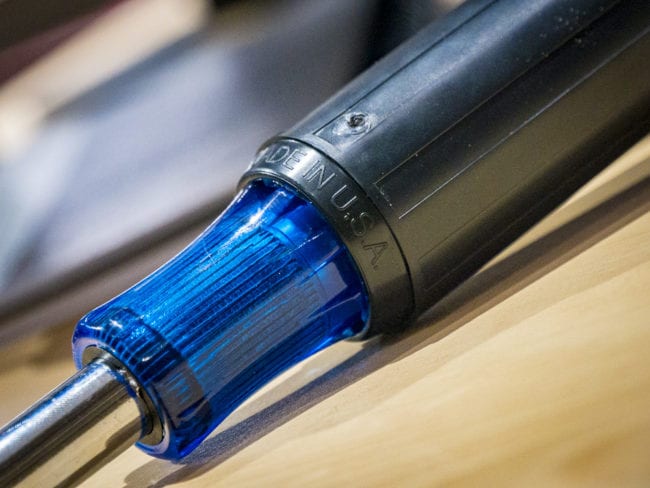
In terms of build quality, all three are professional‑grade. The Klein features the iconic cushion grip that has been an industry standard for decades. The Milwaukee features a tri‑lobe handle design that is aggressively contoured for grip security. The Ideal features a well‑executed overmolded grip that sits somewhere between the two in terms of feel—not as plush as the Klein, not as aggressively textured as the Milwaukee. The bit retention on all three is magnetic and effective. The shank nesting mechanisms are secure and smooth. The choice between them comes down to personal preference in grip design, brand loyalty, and whether that extra 3/16″ size matters to you. The Ideal distinguishes itself by being fully Made in the USA from domestically sourced materials, which for some purchasers is a decisive factor.
Ideal 12‑In‑1 Multi‑Bit Screw and Nut Driver Specifications
| Specification | Detail |
|---|---|
| Model Number | Ideal 35‑946 |
| Nut Driver Sizes | 3/16″, 1/4″, 5/16″, 3/8″ hex |
| Included Bits | 3/16″ Slotted, 1/4″ Slotted, #1 Phillips, #2 Phillips, T10 Torx, T15 Torx, #1 Square, #2 Square |
| Bit Shank | 1/4″ hex, standard |
| Handle | Cushion‑grip, overmolded rubber |
| Total Functions | 12 (4 nut drivers + 8 bits) |
| Made in the USA | Yes |
| Price | $17 – $23 |
Conclusion: A Dozen Drivers, One Handle, No Regrets
The Ideal 12‑In‑1 Multi‑Bit Screw and Nut Driver is a tool that succeeds because it understands its audience. It does not try to be the most feature‑packed driver on the market—there are models with more bits, more sizes, more functions. It does not try to be the cheapest—there are models that cost half as much. What it tries to be, and what it achieves, is a comprehensive, well‑built, comfortable multi‑bit driver that covers the fasteners an electrician actually encounters on a daily basis, without adding unnecessary complexity or compromising the feel of a dedicated driver. The 3/16″ hex size may be superfluous for many users, but its inclusion does not detract from the tool's performance, and for the few electricians who use it, it is a genuine advantage. The overmolded grip, the magnetic bit retention, the secure nesting shanks, and the American manufacturing pedigree all contribute to a tool that earns its place in the tool pouch. At its street price, it is competitive with the best multi‑bit drivers on the market, and for the professional who wants to consolidate their tool kit without sacrificing capability, it is an excellent choice. The space it saves in the pouch, the time it saves in the workflow, and the frustration it eliminates by always having the right driver at hand make it one of those rare tools that pays for itself not in dramatic fashion but in a thousand small, incremental improvements to the daily work experience. If your tool pouch has too much going on in it right now, the Ideal 12‑In‑1 is a solution worth considering.
Comments 0
Leave a Comment