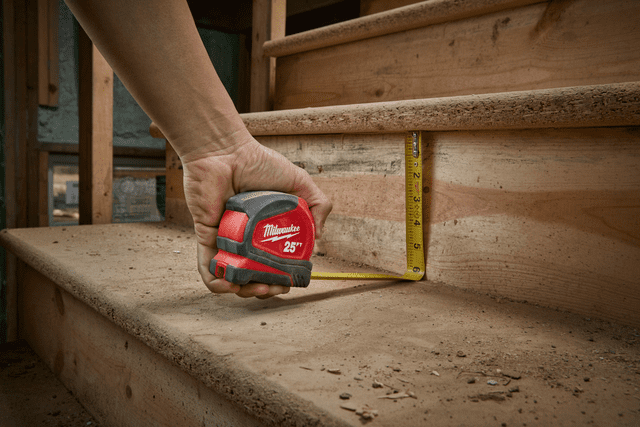
But here’s where any seasoned tool observer gets curious - and a little suspicious. Milwaukee’s full‑size Stud tape measures have built a reputation for being borderline indestructible. They’ve survived drop tests from two stories up, been fired against concrete walls with an oversized slingshot, and even stood in for a baseball in a back‑parking‑lot home‑run derby. To shrink the housing by 30 percent while keeping the same blade length and - according to Milwaukee - the same level of durability, something had to change inside that shell. And then there’s the price. The new compact models are several dollars cheaper than the current larger tapes we’ve come to love. A 25‑foot Milwaukee Stud tape typically hovers around $15 to $20. The new 25‑foot compact lists at $7.99. That’s not a small discount; it’s a near 50‑percent price cut. When a tool company slashes the price that dramatically while claiming identical performance, intelligent buyers don’t just applaud - they ask questions. What did they give up? Is it a cheaper blade stock? A lighter return spring? A more modest standout? Or did Milwaukee genuinely find an engineering efficiency that lets them deliver a smaller, equally tough tape for less money?
We haven’t gotten our hands on these new compact tapes yet - they’re too new - but we’ve been around this industry long enough to read between the lines of a press release and ask the right questions. Let’s walk through everything we know so far, everything we suspect, and how these tapes stack up for the working Pro who’s tired of carrying a brick on their belt.
The Compact Tape Measure Lineup: Models, Lengths, and the Prices That Surprised Everyone
Milwaukee dropped five new compact tape measure models, covering the three classic imperial lengths plus metric equivalents for the globally‑minded crew. Here’s the full roster with current list pricing:
| Model Number | Length | Marking System | Price |
|---|---|---|---|
| 48‑22‑6616 | 16‑foot | Imperial (fractional every 1/8″) | $11.49 |
| 48‑22‑6625 | 25‑foot | Imperial (fractional every 1/8″) | $7.99 |
| 48‑22‑6630 | 30‑foot | Imperial (fractional every 1/8″) | $18.99 |
| 48‑22‑6617 | 5‑meter / 16‑foot | Metric | $11.49 |
| 48‑22‑6626 | 8‑meter / 26‑foot | Metric | $15.49 |
The standout number here is clearly the 25‑foot compact at $7.99. For a tape measure bearing the Milwaukee name and claiming the brand’s full durability suite, eight bucks feels almost like a pricing error - or a loss leader designed to flood the market and hook new users onto the Milwaukee hand tool ecosystem. The 16‑foot model, ironically, costs more at $11.49, which suggests the 25‑foot’s aggressive pricing is a strategic play: the 25‑foot is the volume seller, the tape every framer and trim carpenter buys by the handful, and getting it onto tool belts at under $10 could shift market share faster than any ad campaign. The 30‑foot jumps to $18.99, which is more in line with professional tape pricing for a long‑reach model, but still cheaper than many competing 30‑footers.
All models feature Milwaukee’s proprietary Nylon Bond Blade Protection and the 5‑point reinforced frame. The blades carry standard 1/16‑inch incremental markings, with fractional measurements printed every 1/8 of an inch - a huge readability advantage when you’re calling out measurements to a helper who can’t mentally convert 11/16″ on the fly. The metric models (6617 and 6626) offer clean millimeter and centimeter gradations for jobs that demand metric precision.
The “30% More Compact” Claim: What Shrinking a Tape Measure Actually Means in Your Hand
Milwaukee’s headline claim is that these new tapes are 30 percent more compact than their predecessors, with the most dramatic example being a 25‑foot tape that fits into a case the size of a typical 16‑foot tape measure. To understand why that matters, you have to appreciate how traditional tape measure sizing works. The length of tape coiled inside dictates the diameter of the drum, which dictates the size of the housing. A 25‑foot tape uses a physically larger drum than a 16‑footer because the coil of blade wound around the central hub is thicker - more linear feet of steel means more layers of wound spring steel. To house that larger drum, manufacturers build a taller, wider, or longer case. Anyone who’s clipped a 25‑foot Milwaukee Stud tape next to a compact 16‑foot Stanley knows the difference: the 25‑footer protrudes farther from your hip, swings when you walk, and catches on door frames and ladder rungs.
By collapsing a 25‑foot blade into a 16‑foot‑sized housing, Milwaukee eliminates that daily annoyance without sacrificing reach. For the professional who wears a tape measure eight to ten hours a day, that size reduction has cascading ergonomic benefits. The tape sits tighter to the body, is less likely to snag on materials, and reduces the overall weight dangling from one side of your tool belt, which helps reduce hip fatigue over the long haul. A 30‑percent smaller housing also means the tape takes up less room in a pouch, bag, or drawer - a genuine plus for anyone who’s tried to cram too many tools into a limited space.
How Did They Do It? A Look Inside the Possible Engineering Tradeoffs
This is the $7.99 question. Milwaukee hasn’t released a full teardown or detailed engineering white paper, but from the product photos and basic mechanical principles, we can make some educated guesses about where the size reduction came from - and what, if anything, might have been sacrificed.
The most likely answer is a redesign of the internal spring mechanism. Traditional tape measure return springs occupy a substantial volume inside the case. The spring is coiled flat against the hub, and over decades of tape measure evolution, manufacturers have found ways to make the spring narrower, thinner, or coiled in a more compact geometry without compromising retraction force or longevity. If Milwaukee’s engineers developed a new spring geometry - perhaps a spiral spring with a thinner gauge but equivalent torque, or a more efficiently wound configuration - they could shave precious millimeters off the overall drum diameter, bringing the 25‑foot coil down to a size that fits a 16‑foot shell.
Another possibility is that the blade itself was thinned slightly. Blade thickness directly impacts how large the coiled drum becomes; a thinner blade stacks into a tighter radius. The tradeoff here is standout - the maximum unsupported length the blade can extend horizontally before it buckles. Milwaukee’s existing Stud tapes offer respectable standout for their class, around 11 to 13 feet on the 25‑foot model depending on conditions. If the new compact blade is thinner, standout could decrease by a foot or two. For electricians and plumbers who rarely use standout, that’s meaningless. For framers who stretch the tape across open air to hook a far stud, it could be a noticeable downgrade. We’ll need to test this in person to know for sure.
A third lever Milwaukee could have pulled is reducing the over‑mold or outer protective layers on the housing. The current Stud tapes have a thick rubber over‑mold wrap that contributes significantly to the housing’s outer dimensions while also providing impact absorption. The new compact models appear, from photos, to have a slimmer profile with less pronounced rubberized surfaces. The 5‑point reinforced frame is still there, but the outer armor may be lighter, which could reduce drop survivability at the extreme margins while still passing Milwaukee’s internal durability standards.
A final speculative possibility: a redesigned belt clip. The old tapes have a stout wireform clip that adds bulk. The new ones may use a flatter stamped metal or plastic clip that brings the tape closer to the belt, reducing effective size. That alone wouldn’t account for the full 30 percent, but it contributes to the “feel” of compactness.
Nylon Bond Blade Protection: The Secret Sauce That Keeps Milwaukee Blades Readable After Years of Abuse
One feature Milwaukee transferred directly from the larger Stud tapes to the Compact line is the Nylon Bond Blade Protection. In a standard tape measure, the markings are printed onto the steel blade and then covered with a thin clear polyester film. That film protects the ink from abrasion, but after months of sliding in and out of the housing, rubbing against concrete, metal studs, and gritty lumber, the film wears off, and the numbers fade into illegibility. A tape with faded markings is a liability - you squint, you guess, you cut wrong.
Milwaukee’s Nylon Bond technology replaces the post‑applied film with a nylon coating that is bonded directly to the steel during the blade manufacturing process. Think of it as a molecular‑level armor that becomes part of the blade, not a sticker that can peel. The nylon is far more abrasion‑resistant than polyester film, and because it’s bonded rather than laminated, it resists delamination even when the blade gets kinked or bent. In third‑party testing and in daily use, Milwaukee blades with Nylon Bond consistently remain readable long after uncoated blades have worn down to bare steel. That longevity directly impacts a pro’s bottom line: fewer tape replacements per year, fewer mis‑reads, fewer re‑cuts.
The compact tapes inherit this technology fully. Even at the $7.99 price point, the 25‑foot model’s blade will wear just as well as the premium Stud versions - at least, that’s the claim. If true, it flips the script on the assumption that a cheaper tape necessarily means cheaper blade durability. The housing might be a bit leaner, but the blade itself could be just as tough.
5‑Point Reinforced Frame: Drop Protection That’s More Than Marketing Jargon
Milwaukee’s “5‑point reinforced frame” is not a new concept for anyone familiar with the brand’s hand tools, but it’s worth dissecting what it actually provides. When a tape measure hits the ground - which it does, constantly - the impact energy concentrates at the corners and edges of the housing. Cheap tapes shatter at the first sidewalk drop because the plastic has no reinforcement at those critical stress points. Milwaukee’s 5‑point frame integrates reinforcement into the five regions most likely to take a hit: the four corners of the housing and the area around the blade hook opening. These reinforced zones are often molded from a higher‑impact polymer or over‑molded with rubber that deforms on impact to absorb energy.
The result is a tape measure that shrugs off falls that would send a lesser tool to the trash can. In the infamous Pro Tool Reviews durability torture tests, Milwaukee’s 5‑point reinforced tapes have been dropped repeatedly from second‑story heights, launched against walls with a giant slingshot, and even whacked like a baseball - and they kept working. The internal spring mechanism sometimes needs re‑tensioning after the most extreme abuse, but the housings rarely crack. If the compact models carry the same 5‑point architecture, even in a slimmer form, they should still handle everyday drops off ladders, scaffolding, and sawhorses without complaint. The key unknown is whether the thinner housing profile reduces the impact‑absorbing capacity enough to matter in the worst‑case scenarios. For 99% of drops, probably not.
Fractional Markings Every 1/8 Inch: Why This Matters More Than You’d Think
Tape measure readability has improved dramatically over the last decade, and Milwaukee pushed that trend hard with its original Stud tapes that printed fractions directly on the blade. The compact tapes continue the practice: every 1/8‑inch increment is labeled with its fractional measurement - 1/8, 1/4, 3/8, 1/2, and so on. For experienced Pros who’ve memorized the 16‑inch layout, this might seem like training wheels. But in practice, even seasoned tradespeople benefit from fractional markings when they’re working in awkward positions, in low light, or when they’re tired at the end of a long day and their eyes aren’t focusing like they used to. The fractions eliminate the mental step of counting tick marks and converting to a spoken measurement; you see “5/8” and you say “five‑eighths.” No brain cycles wasted on arithmetic, which reduces errors and speeds up layout.
For apprentices and new hires, fractional markings are a teaching tool that shortens the learning curve. A first‑year framer who can immediately read “7/8” without hesitation is a more productive team member on day one. For the crew lead, that means fewer mistakes to correct, less time spent explaining the difference between 9/16 and 11/16, and a smoother workflow overall.
The Price Point Puzzle: Why Is the 25‑Foot Compact So Much Cheaper Than the Full‑Size Stud?
Let’s address the elephant in the room directly: a 25‑foot Milwaukee tape measure selling for $7.99 feels almost too good to be true. The current Milwaukee 25‑foot Stud (model 48‑22‑7125) retails for around $15–$17 at most outlets. That’s a proven, beloved tool. The new compact comes in at roughly half that price. Is Milwaukee slashing margins to gain market share, or is there a meaningful specification difference that explains the gap?
From the limited information available, we suspect a combination of factors:
1. Reduced Material Costs in the Housing: A smaller case uses less plastic and less over‑mold rubber per unit. Multiply that by hundreds of thousands of units, and the per‑unit savings add up. The slimmer housing may also slash manufacturing cycle time and reduce shipping volume, lowering logistics costs.
2. A Less Robust Return Spring: The spring is a significant cost driver in a tape measure. A smaller spring optimized for a compact housing might be cheaper to produce, but it could also have a slightly softer retraction feel or a shorter service life. Whether that tradeoff matters depends on how heavily you rely on the tape’s auto‑retract, all day, every day.
3. Lower Standout: Standout is a premium feature. Tapes that boast 13‑foot or 15‑foot standout command higher prices because they require a thicker, more rigid blade. If the compact’s standout is a foot or two shorter due to a thinner blade, the blade itself is cheaper to produce. Milwaukee isn’t advertising a specific standout figure for the compact line, which is telling - the Stud tapes proudly advertise their standout numbers.
4. Economies of Scale and Market Strategy: Milwaukee is playing a volume game. By pricing the 25‑foot compact at $7.99, they’re putting it in the impulse‑buy range. A pro walking through a supply house can grab two for the price of one premium competitor tape. That strategy can rapidly erode Stanley, Lufkin, and other legacy brands’ shelf space and loyalty. Milwaukee may be willing to accept a razor‑thin margin on this single SKU as a “gateway” product that brings users into the Milwaukee hand tool ecosystem, where they’ll later buy Milwaukee’s higher‑margin tools.
The critical question for buyers is: does the cheaper price come with a cheaper user experience? If the blade wears just as well, the housing survives drops just as reliably, and the retraction feels snappy, then $7.99 is a steal. If the standout is notably shorter or the lock feels mushy, then some pros may prefer to spend the extra money on the full‑size Stud for the tasks that demand it, and use the compact as a secondary tape for quick measurements.
How the Compact Tapes Might Feel in Daily Use: A Hypothetical Day on the Job
Let’s construct a realistic scenario: a finish carpenter arrives at a custom home to install a kitchen full of cabinetry. He clips the 25‑foot compact onto his belt in the morning. At 7:00 AM, he’s measuring ceiling height for crown molding. The 25‑foot reach is plenty; the compact housing doesn’t bang against the top of his ladder. At 9:30 AM, he’s laying out base cabinet positions. He’s bending down, standing up, the tape swinging; the reduced bulk means it doesn’t clatter against drawer fronts. At noon, he’s measuring for filler strips near a stone backsplash. He appreciates the Nylon Bond blade because the tape inevitably gets dragged across rough mortar joints. At 3:00 PM, he drops the tape off a 6‑foot ladder onto a concrete subfloor. The 5‑point reinforced frame does its job - the housing survives with a cosmetic scuff, no crack. At 5:00 PM, it’s cleanup time, and he wipes down the blade; the markings are still crisp.
Throughout that day, the tape’s standout might only matter once - when he tries to measure a long unsupported span across the kitchen island, and the blade droops at 9 feet instead of 11 feet like his old full‑size Stud. It’s a minor inconvenience; he moves a few steps closer and hooks the far edge. The tradeoff - a slightly shorter standout for half the upfront cost and far less belt bulk - is one he’s happy to make.
That’s the story Milwaukee is banking on. For the majority of tradespeople, standout is a nice‑to‑have, not a daily requirement. Compactness, durability, and readability are the true daily drivers. If the new compact tapes deliver on those three fronts, the slightly lower standout and lighter spring won’t stop them from flying off shelves.
What the Trades Are Saying About Small Tapes and Big Reach
We spoke with a handful of contractors who’ve seen the compact tape announcement. Their reactions capture the mix of excitement and skepticism.
“I’ve been carrying a 25‑foot Stud for three years. Love the durability, hate the bulk. If I can get the same blade in a smaller case, I’m buying five of them. The price means I can stash them everywhere - truck, shop, pouch, kitchen drawer at home.”
– Alan R., Renovation Contractor, Charlotte NC
“I’m a little wary. When something gets smaller and cheaper, usually something gets weaker. I’ll wait for the drop tests. If they hold up like the old ones, I’ll switch. Until then, I’m not risking my tape breaking mid‑job to save eight bucks.”
– Pete J., Framer, Boise ID
“I’m an electrician. I almost never need standout. I need a tape that doesn’t snag on conduit and fits in my pocket. The compact 25‑footer sounds perfect. At eight dollars, I’m not even going to think about it. I’ll buy one just to try.”
– Dana M., Journeyman Electrician, Phoenix AZ
Speculative Comparison: New Compact vs. Current Milwaukee Stud (25‑Foot Models)
| Feature | New Compact (48‑22‑6625) | Current Stud (48‑22‑7125, typical) |
|---|---|---|
| Housing Size | ~16‑foot tape size (30% smaller) | Full 25‑foot tape size |
| Price | $7.99 | $15–$17 |
| Blade Protection | Nylon Bond | Nylon Bond |
| Reinforced Frame | 5‑point | 5‑point |
| Fractional Markings | Yes, every 1/8″ | Yes, every 1/8″ |
| Standout (estimated) | Unknown; likely reduced | ~11–13 feet |
| Blade Width | Likely similar (1‑1/8″ or 1‑3/16″) | 1‑1/8″ to 1‑3/16″ |
| Belt Clip | Likely redesigned (flatter) | Stout wire form |
| Warranty | Limited lifetime (expected) | Limited lifetime |
Where Milwaukee’s Compact Tapes Fit Into a Crowded Tape Measure Market
The tape measure aisle at any professional tool retailer is a battlefield of colors, claims, and loyalties. Stanley’s FatMax dominates with massive standout numbers and a die‑hard following. Lufkin’s Black Widow and Shockforce tapes appeal to the dark‑horse crowd. Komelon and Tajima bring metric precision and ergonomic innovations from overseas. Klein and Ideal capture the electrical trades. And then there’s Milwaukee, which barged in relatively late and has been systematically converting users by leveraging its cordless tool brand loyalty and delivering genuinely tough products.
The compact line targets a specific but growing segment: the pro who’s tired of oversized tapes. Over the past 15 years, tape measures have trended larger - wider blades for more standout, beefier cases to survive higher drops, more rubber over‑mold for grip. The result has been tapes that feel like hockey pucks on the hip. Milwaukee’s compact offering feels like a course correction, acknowledging that not every user needs a tape that can stand out 14 feet unsupported. By offering a smaller, lighter, more affordable alternative that still carries the brand’s core durability credentials, Milwaukee is essentially segmenting the market: Stud tapes for extreme durability and standout, Compact tapes for everyday portability and value. The person who frames houses all day in high wind may still want the Stud. The trim carpenter, the electrician, the plumber, the cabinet installer - they may all prefer the Compact.
Should You Buy the Milwaukee Compact Tape Measure Right Now?
If you’re in the market for a new everyday tape measure and you’ve always found the Milwaukee Stud to be overbuilt for your needs, the Compact line is a compelling option - with the caveat that we haven’t verified the real‑world durability or standout yet. The $7.99 price on the 25‑foot model makes it one of the lowest‑risk tool purchases you’ll make this year. Even if the standout ends up being shorter than the Stud, you’re getting a tape with Nylon Bond blade protection and a 5‑point reinforced housing for less than the cost of a fast‑food lunch for two. For belts that need a dedicated “quick‑measure” tape, a secondary tape to keep in the glove box, or a tape you won’t cry over if an apprentice drops it into wet concrete, the value proposition is hard to beat.
For users who depend on extreme standout - framers working on open walls, concrete form setters spanning wide distances solo - it’s worth waiting until the standout figures are confirmed. If the compact tops out at 9 or 10 feet, heavy framers may want to stick with the Stud or a FatMax for primary use and keep the compact for detail work.
Final Thoughts: Milwaukee Bets on Smaller, Cheaper, and Just as Tough
The Milwaukee Compact Tape Measure line is a calculated move that extends the brand’s hand tool dominance into a space where bulk‑weary professionals are actively looking for a change. By shrinking the 25‑foot tape into a 16‑foot housing, maintaining the Nylon Bond blade protection and 5‑point reinforced frame, and dropping the price to an almost too‑good‑to‑believe $7.99, Milwaukee is sending a clear signal: they believe the future of the everyday tape measure is compact, affordable, and tough enough to survive real jobsite abuse.
The questions that remain - about standout, spring longevity, and whether any hidden compromises were made - will be answered as soon as these tapes reach our hands and we subject them to the same slingshot, drop, and shop tests we’ve applied to every Milwaukee tape before them. Until then, the compact tape measures are available now at Acme Tools and other Milwaukee retailers. At these prices, the barrier to testing one yourself is practically nonexistent. Clip a 25‑foot compact onto your belt, work it for a week, and decide if the size difference alone justifies the switch. Chances are, once you experience a full‑reach tape that doesn’t swing like a pendulum, you won’t want to go back.
Comments 0
Leave a Comment