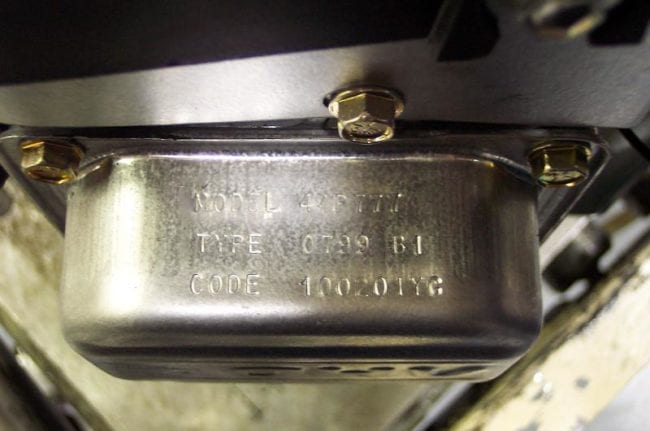
The affected engines were not sold directly to consumers by Briggs & Stratton. They were incorporated into complete riding lawnmowers manufactured by three different companies—Craftsman (sold by Sears), Husqvarna (sold by The Home Depot), and Bad Boy (sold by Tractor Supply Company)—and sold to consumers under those brands. A consumer who purchased one of these mowers would not necessarily have known, or cared, that the engine inside was a Briggs & Stratton product. They would have trusted the brand on the hood—Craftsman, Husqvarna, or Bad Boy—and assumed that the machine had been designed, built, and tested to operate safely. The recall, therefore, required coordination across multiple companies and multiple retail networks, a logistical challenge that is far more complex than a recall of a product sold directly by its manufacturer. Briggs & Stratton, as the maker of the engine, took the lead on the recall, but the responsibility for notifying consumers was shared with Sears, The Home Depot, and Tractor Supply Company—and the effectiveness of the recall depended on how diligently each of those retailers worked to reach the people who had purchased the affected mowers. In the end, only about fifty units were involved—a tiny number by the standards of mass‑market consumer product recalls, which often involve tens or hundreds of thousands of items. But the small number did not diminish the seriousness of the hazard. A single runaway mower can cause catastrophic injury, and the fact that no injuries were reported before the recall was issued is a testament to good fortune, not to good design. The recall was a preemptive strike against a danger that had been identified before it had a chance to manifest in tragedy, and in that sense, it was a model of how the product safety system is supposed to work.
The Anatomy of the Defect: How a Misrouted Wire Can Defeat an Engine's Safety Systems
To understand why the Briggs & Stratton recall was necessary, it is essential to understand, at least in broad terms, how the shut‑off systems on a modern riding lawnmower are designed to work—and how a single wire, placed in the wrong position during assembly, can render those systems inoperative. A riding mower is designed with multiple, redundant safety interlocks, each one intended to stop the engine or disengage the blades if a potentially dangerous condition occurs. The most important of these interlocks is the ignition switch. When the operator turns the key to the OFF position, the ignition switch grounds the ignition coil, preventing it from producing a spark. Without a spark, the engine cannot fire, and it stops running. This is the primary method by which the operator shuts down the mower at the end of a job, or in an emergency. The second critical interlock is the seat switch. Beneath the operator's seat, a pressure‑sensitive switch detects whether the operator is sitting in the seat. If the operator stands up—or falls off—while the mower is in gear or while the blades are engaged, the seat switch is designed to kill the engine, preventing the mower from continuing to move or cut without an operator at the controls. This is a critical safety feature that has been standard on riding mowers for decades, and it has prevented countless injuries by ensuring that an unattended mower does not become an unmanned, self‑propelled hazard. There are additional interlocks as well—switches that prevent the engine from starting unless the blades are disengaged and the transmission is in neutral, for example—but the ignition switch and the seat switch are the two primary lines of defense against a runaway mower. Both of these switches work by completing or interrupting an electrical circuit that connects to the engine's ignition system. The wiring that carries these signals—from the key switch, from the seat switch, from the various safety interlocks—is bundled together and routed through the engine compartment, where it is exposed to heat, vibration, and the physical abrasion of rubbing against metal components. The routing of this wiring harness is a critical aspect of the mower's design. The wires must be positioned so that they do not come into contact with moving parts, with sharp edges, or with surfaces that become hot enough to melt the insulation. They must be secured at regular intervals to prevent them from shifting over time due to vibration. And they must be protected by conduit, loom, or other shielding wherever they pass through areas of potential abrasion. A failure at any point in this wiring harness—a broken wire, a disconnected connector, a short circuit caused by worn‑through insulation—can disable one or more of the safety interlocks, potentially without any visible indication to the operator that something is wrong. The engine may start and run normally. The mower may cut grass as expected. But the safety net that is supposed to catch the operator if something goes wrong has been silently removed, and the first sign of trouble may be the moment when the operator turns the key to OFF and the engine continues to run.
In the case of the Briggs & Stratton 40 V‑Twin engines that were the subject of the recall, the problem was traced to a specific manufacturing error: the wiring harness was misrouted during assembly, placing one or more wires in a position where they could rub against a metal component. Over time—and not necessarily a long time—the insulation on the wire could wear through, exposing the bare copper conductor beneath. If that exposed conductor then touched the metal frame of the engine or the mower, it would create a short circuit, grounding the wire. If the wire that was grounded happened to be the one that carried the shut‑off signal from the ignition switch or the seat switch, the result would be that the signal could never reach the ignition coil—and the engine could continue to run regardless of the position of the key or the presence of the operator in the seat. The defect was not in the design of the engine. It was not in the design of the wiring harness. It was in the execution—a wire that was placed in the wrong position during the assembly process, a position that subjected it to chafing and wear. This is the kind of manufacturing defect that is notoriously difficult to catch through quality control inspections. A misrouted wire looks very much like a correctly routed wire to a visual inspector who is not intimately familiar with the exact routing specifications. It is only over time, as the insulation gradually wears away, that the defect becomes apparent—and by then, the mower is likely in the hands of a consumer, who has no reason to suspect that the safety systems on their machine have been compromised. The recall was issued after Briggs & Stratton identified the problem and determined which specific engines were affected. The affected engines were identified by a date code—100201Y—stamped on the valve cover, located at the front of the engine near the oil dipstick. This narrow identification allowed the recall to be targeted precisely at the fifty or so units that were known to have the defect, rather than issuing a broader, more costly, and more disruptive recall of a larger population of engines. The affected mowers were sold under three brand names: Craftsman model 247:289810 (sold by Sears), Husqvarna model 960460016 (sold by The Home Depot), and Bad Boy model BBM4826BS (sold by Tractor Supply Company). The mowers were sold in February and March of 2010, at prices ranging from $1,500 to $3,500—representing a significant investment for homeowners and an even more significant one for small landscaping businesses that might have purchased them as part of their commercial equipment fleet.
The Recall Process: How Fifty Mowers Triggered a Multi‑Company Response
The recall, announced in February 2011—roughly a year after the affected mowers had been sold—was conducted under the auspices of the U.S. Consumer Product Safety Commission, the federal agency responsible for protecting the public from unreasonable risks of injury or death associated with consumer products. The CPSC has the authority to issue mandatory recalls, but the vast majority of recalls are voluntary—negotiated between the CPSC and the manufacturer, and announced by the manufacturer with the CPSC's oversight and approval. The Briggs & Stratton recall followed this model: the company identified the defect, reported it to the CPSC, and worked with the agency to craft a remedy that would be effective and practical. The remedy was straightforward: consumers were instructed to immediately stop using the affected riding mowers and to contact a Briggs & Stratton Authorized Dealer for a free inspection and repair. The repair itself—rerouting the wiring harness to prevent chafing, and replacing any wires that had already been damaged—was a relatively simple procedure for a qualified service technician. The challenge was not in the repair, but in the notification. How does a manufacturer reach the owners of fifty riding mowers that were sold through three different retailers, under three different brand names, a year after the sale? The CPSC recall system relies on a combination of direct notification and public announcement. For products where the manufacturer has a direct relationship with the consumer—through product registration cards, warranty databases, or direct sales—the manufacturer can mail a recall notice directly to the consumer's address. For products sold through retailers, the manufacturer must rely on the retailer to assist with notification, and on the consumer to hear about the recall through public channels—the CPSC website, news media, social media, word of mouth. In this case, Sears and Briggs & Stratton were able to identify and notify the purchasers of the affected Craftsman and Husqvarna models by letter. Tractor Supply Company, however, did not notify the purchasers of the affected Bad Boy models—a gap in the recall process that left those consumers dependent on public awareness to learn about the defect and the remedy. The fact that Tractor Supply Company did not notify its customers is a troubling aspect of this recall. It is not clear why the company chose not to participate in the direct notification process—whether it lacked the customer data, whether it declined to share that data with Briggs & Stratton, or whether there was some other reason—but the result was that owners of the Bad Boy mowers were at greater risk of continuing to use a defective machine, unaware of the danger. This gap highlights a persistent weakness in the consumer product safety system: the effectiveness of a recall depends heavily on the cooperation of retailers, and when a retailer does not cooperate, consumers are left unprotected. The CPSC has limited ability to compel retailers to participate in recall notifications, particularly for voluntary recalls, and the agency's enforcement resources are spread thin across the vast landscape of consumer products that fall under its jurisdiction. For the owners of the affected Bad Boy mowers, the recall notice on the CPSC website, the press releases issued by Briggs & Stratton, and the media coverage that the recall generated were the only lines of defense. Whether those lines were sufficient is impossible to know, because no injuries were reported from any of the affected mowers—a fact that is either a testament to the effectiveness of the recall or a reflection of the small number of units involved and the random chance that none of them happened to fail in a way that caused an injury.
The Bigger Picture: Why Recalls Like This Matter, Even When They Are Small
Fifty riding mowers. In the grand scheme of consumer product recalls, that is a tiny number—a rounding error compared to the tens of millions of defective airbags recalled by Takata, the millions of Samsung Galaxy Note 7 phones recalled due to battery fires, or the hundreds of thousands of defective cribs, toys, and appliances that are recalled each year. It would be easy to dismiss the Briggs & Stratton recall as a minor incident, a footnote in the annals of product safety, a problem that affected a handful of people and was resolved before anyone got hurt. But that would be a mistake. Every product recall, no matter how small, is a testament to the fact that the systems we build are imperfect—that materials fail, that assembly errors occur, that designs that look flawless on a computer screen can harbor hidden weaknesses that only become apparent in the real world, under real conditions, after months or years of use. Every product recall is also an opportunity to learn—for the manufacturer, to improve its quality control processes and its assembly procedures so that the same error does not occur again; for the regulatory agency, to identify patterns and trends that might point to broader systemic problems; for the retailer, to examine its own responsibilities in the distribution and notification chain; and for the consumer, to understand that even the most trusted brands can produce a defective product, and that the only defense against that reality is vigilance—checking for recalls, registering products, and paying attention to the warning signs that a machine is not behaving as it should. The Briggs & Stratton recall is also a reminder of the critical importance of the safety interlocks that we take for granted. The ignition switch, the seat switch, the blade engagement interlock—these are not mere conveniences or regulatory annoyances. They are the culmination of decades of engineering effort, informed by thousands of injuries and deaths that occurred before these safety features became standard. Each one of those injuries and deaths was a person who turned off a mower and it kept running, or who fell off a mower and it kept cutting. The fact that we now expect our mowers to shut off when we turn the key or stand up from the seat is a tribute to the engineers, the regulators, and the consumer advocates who fought to make those features mandatory. The fact that a single misrouted wire can defeat all of those safety features is a sobering reminder that safety is never absolute. It is a compromise, a balance between protection and cost, between redundancy and simplicity, between the ideal of a perfectly safe machine and the reality of a machine that can be manufactured, sold, and maintained at a price that consumers are willing to pay. The Briggs & Stratton recall, in its small way, tilted that balance back toward safety—identifying a flaw, notifying consumers, and repairing the defect before anyone was hurt. It was a moment in the long, unending work of making the products we use every day a little bit safer, and it deserves to be remembered not for its scale, but for its seriousness.
Briggs & Stratton Runaway Mower Recall Details
| Detail | Information |
|---|---|
| Product Recalled | Briggs & Stratton Model 40 V‑Twin Engine |
| Date Code | 100201Y (stamped on valve cover) |
| Units Affected | Approximately 50 |
| Affected Mower Models | Craftsman 247:289810 (Sears), Husqvarna 960460016 (Home Depot), Bad Boy BBM4826BS (Tractor Supply Co.) |
| Hazard | Misrouted wiring may wear and disconnect from the shut‑off device, allowing the engine to continue running when the key is OFF or when the operator leaves the seat |
| Incidents/Injuries | None reported |
| Sale Dates | February and March 2010 |
| Price Range | $1,500 to $3,500 |
| Remedy | Immediately stop using the mower; contact a Briggs & Stratton Authorized Dealer for free inspection and repair |
| Consumer Contact | Briggs & Stratton Corporation at (866) 927‑3349, 9 a.m. to 6 p.m. ET Monday through Friday, or www.briggsandstratton.com |
| Notification | Sears and Briggs & Stratton notified Craftsman and Husqvarna purchasers by letter; Tractor Supply Company did not notify Bad Boy purchasers |
What Consumers Can Learn From the Runaway Mower Recall
The Briggs & Stratton recall, though it involved only fifty units, carries lessons that extend far beyond the specific mowers that were affected. For consumers, the most important lesson is the value of product registration. When a consumer purchases a riding mower, a power tool, an appliance, or any other product that could pose a safety risk if it were to malfunction, the manufacturer typically includes a product registration card in the box. Filling out that card and mailing it in—or registering online, as most manufacturers now allow—is one of the simplest and most effective steps a consumer can take to protect themselves. Registration establishes a direct line of communication between the manufacturer and the consumer, so that if a recall is issued, the manufacturer can notify the consumer directly. Without registration, the manufacturer has no way of knowing who owns the product, and the consumer must rely on chance—a news article, a social media post, a conversation with a neighbor—to learn that the product they own has been recalled. As the Bad Boy portion of this recall demonstrates, even purchasing from a reputable retailer does not guarantee that the retailer will notify you of a recall. The second lesson is the importance of paying attention to how a machine behaves. A riding mower that does not shut off immediately when the key is turned is a mower that has a problem—even if it eventually shuts off after a delay, even if the problem is intermittent, even if the mower otherwise runs perfectly. Safety interlocks are designed to work instantly and reliably, every time. Any deviation from that standard is a red flag that should prompt the owner to stop using the machine and have it inspected by a qualified technician. The three lesson is the value of the CPSC as a resource. The CPSC website—www.cpsc.gov—maintains a searchable database of every product recall that the agency has ever issued. Consumers can search by product category, by brand name, or by date, and they can sign up for email alerts that notify them of new recalls. The website also provides information on how to report a dangerous product—a mechanism that allows consumers to alert the CPSC to potential hazards that the manufacturer may not yet have identified. The CPSC is not a perfect agency, and its resources are limited, but it is the primary line of defense for American consumers against dangerous products, and it deserves more attention and more funding than it typically receives. For manufacturers, the recall is a reminder that the cost of a recall—in direct expenses, in brand reputation, in potential liability—is far lower than the cost of the injuries and deaths that a recall is designed to prevent. A company that responds quickly and transparently to a safety issue, that cooperates fully with the CPSC, and that makes a genuine effort to reach affected consumers will ultimately be viewed more favorably by the public than a company that delays, obfuscates, or resists. Briggs & Stratton, to its credit, appears to have handled this recall responsibly—identifying the defect, issuing a voluntary recall, and working with its dealer network to perform the necessary repairs at no cost to consumers. The gap in notification for Bad Boy purchasers is a blemish on an otherwise well‑executed recall, and it is a gap that Tractor Supply Company should be held accountable for. But the overall picture is one of a system that worked—a defect was found, a recall was issued, and no one was hurt. In the world of consumer product safety, that is the definition of success.
Conclusion: A Small Recall With a Large Lesson
The Briggs & Stratton recall of fifty riding mower engines is a footnote in the history of consumer product safety, a small event that is unlikely to be remembered by anyone outside of the immediate circle of people who were involved in it. But it is a footnote that tells a larger story—about the complexity of the safety systems that we depend on, about the fragility of those systems in the face of something as simple as a misrouted wire, and about the ongoing, often invisible work that is required to keep those systems intact. For the owners of the affected mowers, the recall was an inconvenience and, perhaps, a moment of anxiety as they realized that the machine they had been using to mow their lawns for the past year had a hidden flaw that could have caused them harm. For the engineers at Briggs & Stratton, it was a lesson in the importance of assembly precision and quality control. For the retailers, it was a test of their commitment to customer safety—a test that Sears and The Home Depot passed, and that Tractor Supply Company, for reasons that remain unclear, did not. And for the CPSC, it was another entry in the vast database of recalls that the agency manages, another case file in the endless effort to make the products that fill our lives a little bit safer. The runaway mower recall is not a dramatic story. There were no explosions, no fires, no tragic deaths. But it is a story that deserves to be told, because it illustrates, on a small and manageable scale, the principles that govern product safety at the largest and most consequential levels. Every product recall, from the fifty‑unit Briggs & Stratton campaign to the multi‑million‑unit Takata airbag disaster, is a struggle between the forces of entropy—the misrouted wires, the flawed designs, the corner‑cutting manufacturers—and the forces of safety—the vigilant engineers, the persistent regulators, the informed consumers. The runaway mower recall was a victory for the forces of safety, a small battle won in a war that will never be fully over. And for the fifty people who owned those mowers, it was the difference between a machine that would stop when they told it to, and a machine that might not. That is a difference worth fighting for.
Comments 0
Leave a Comment